
When I first looked into productivity techniques, two ideas seemed at odds: flow state and the Pomodoro method.
Flow is all about getting lost in your work – those magical moments where time disappears. Pomodoro, on the other hand, encourages you to stop every 25 minutes.
So which one’s better?…Turns out… they’re not enemies.
Content
- How I Got Started (with link to freebie)
- What is the Pomodoro Method?
- Why Use Pomodoro?
- Tips From My Experience
- Want to Learn More? (with link to original source)
After digging into the original Pomodoro method, I realized it’s not meant to disrupt flow. Indeed, it’s designed to support and sustain it.
By working in short bursts, you can maintain focus without burning out. Pomodoro method changed how I approached both deep work and time management.
How I Got Started
I used to bounce between frantic deadline mode and procrastination until I bought a cute little tossable Pomodoro timer and tried it out. That small, tactile timer sprinkled a little fun in my Pomodoro practice journey and helped me stick with it. (It’s silly, but flipping that cube became part of my work ritual)
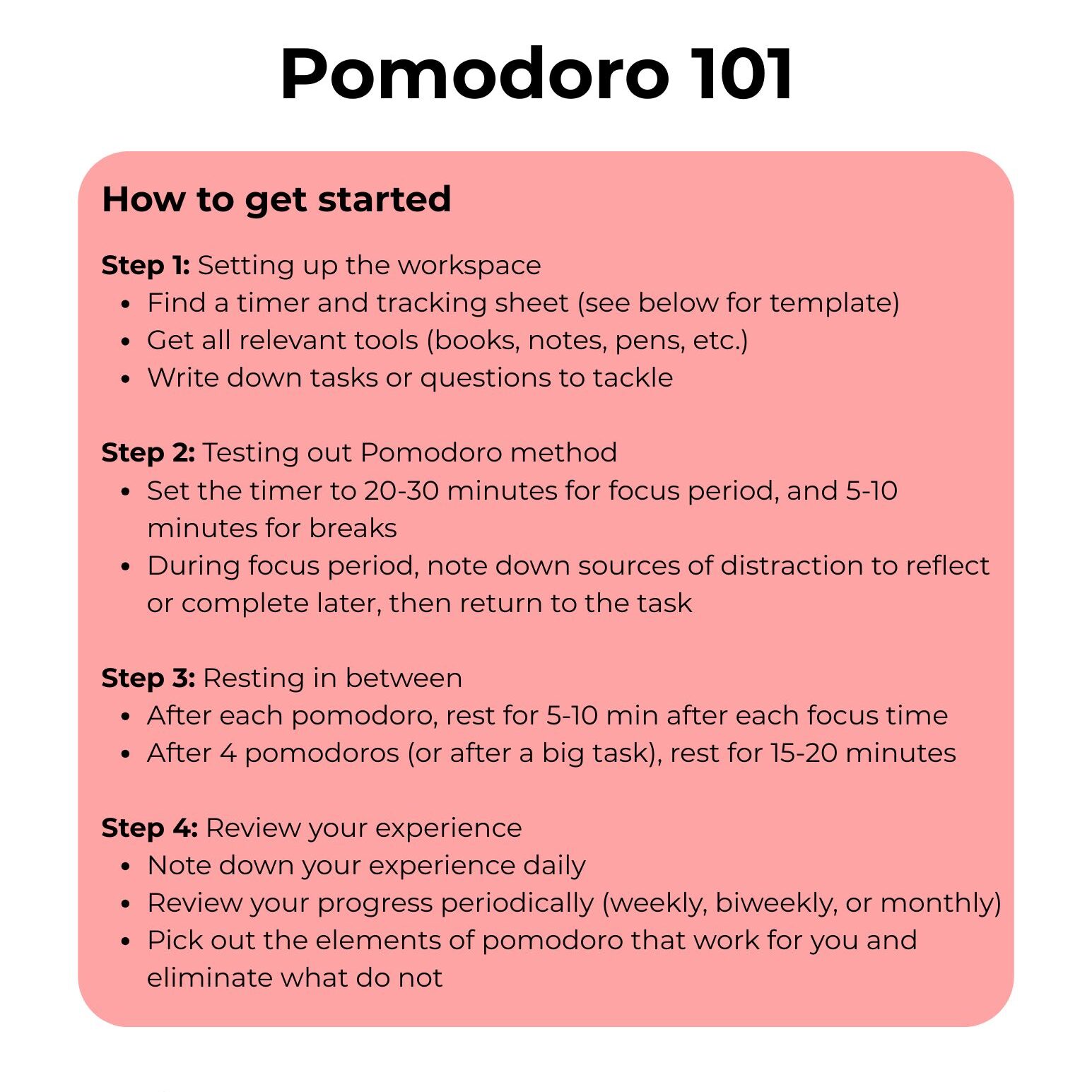
Along the way, I also adjusted my to-do list to align with Pomodoro method. I’ve made a printable Pomodoro-style to-do list (with instructions on how to get started and reflecting questions).
Click here to grab it for free!

What is the Pomodoro Method?
Created by Francesco Cirillo in the late 1980s, the Pomodoro method breaks work into 25-minute focus sessions, followed by 5-minute breaks. It is recommended that, after four Pomodoros, you take a longer break.
The name came from a tomato-shaped kitchen timer Cirillo saw while trying to figure out how to be more productive. He started with 10-minute challenges, eventually settling on 25 minutes as a sweet spot. That said, anywhere between 20–30 minutes works. It’s flexible.
Why Use Pomodoro?
Here’s what I’ve personally found helpful:
✅ Scheduled Breaks to Avoid Burnout
Working for hours straight feels productive, but it can exhaust your brain power. Pomodoro gives your mind regular breaks to reflect and recharge.
✅ Better Focus (Even with Distractions)
If you’re prone to distraction (just as myself), knowing you only need to focus for 25 minutes helps. You can tell yourself: “I’ll check my messages after this Pomodoro.”
✅ Time Becomes Measurable
Instead of tracking minutes and hours, I now think in Pomodoros (or half an hour unit). “Writing a blog post? That’ll be 2–3 Pomodoros for research, 1–2 to draft, and 1 to edit.”
✅ Reduces Overwhelm
Big tasks feel more doable when you break them into Pomodoros. Instead of stressing about finishing the whole thing, I just ask: “What can I do in the next 25 minutes?”
✅ Realistic About My Pace
I used to overestimate how fast I could get things done. Using Pomodoro methods help me realistically estimate how long things actually take without feeling guilty.
Tips From My Experience
- Ease into it with casual breaks. Before using a timer, I just took short breaks after finishing small tasks. That simple habit made such a difference, it convinced me to try Pomodoro more seriously.
- Don’t use Pomodoro for leisure. It’s meant for goal-oriented tasks. Don’t turn your downtime into a checklist. Let fun be fun.
- Stay flexible. If you finish a task early or need extra time, adjust the session. It’s a guideline, not a rule.
- Start a pomodoro with a question. For open-ended tasks (like research), I use each Pomodoro to answer one key question. It helps me stay focused, even when I’m unsure where to begin.
- Make it fun! I started with a phone timer, but got distracted too easily. Then I found a physical cube timer that you flip to set the time. It feels like a game (and you may have heard how effective gamification is). It’s simple, effective, and affordable. I’ll link it here if you’re curious.
Notes: If you’d rather go low-tech, I’ve also made a free printable Pomodoro-style to-do list (with instructions and reflection sheet), click here to grab it.
Want to Learn More?
There’s a lot of content out there about the Pomodoro method, but if you want to go to the source, I recommend reading Francesco Cirillo’s own writing. It’s a great overview of the method, its purpose, and how to adapt it.
